News & Insights
Stay updated with the latest announcements, tutorials, and insights from the Credible team.
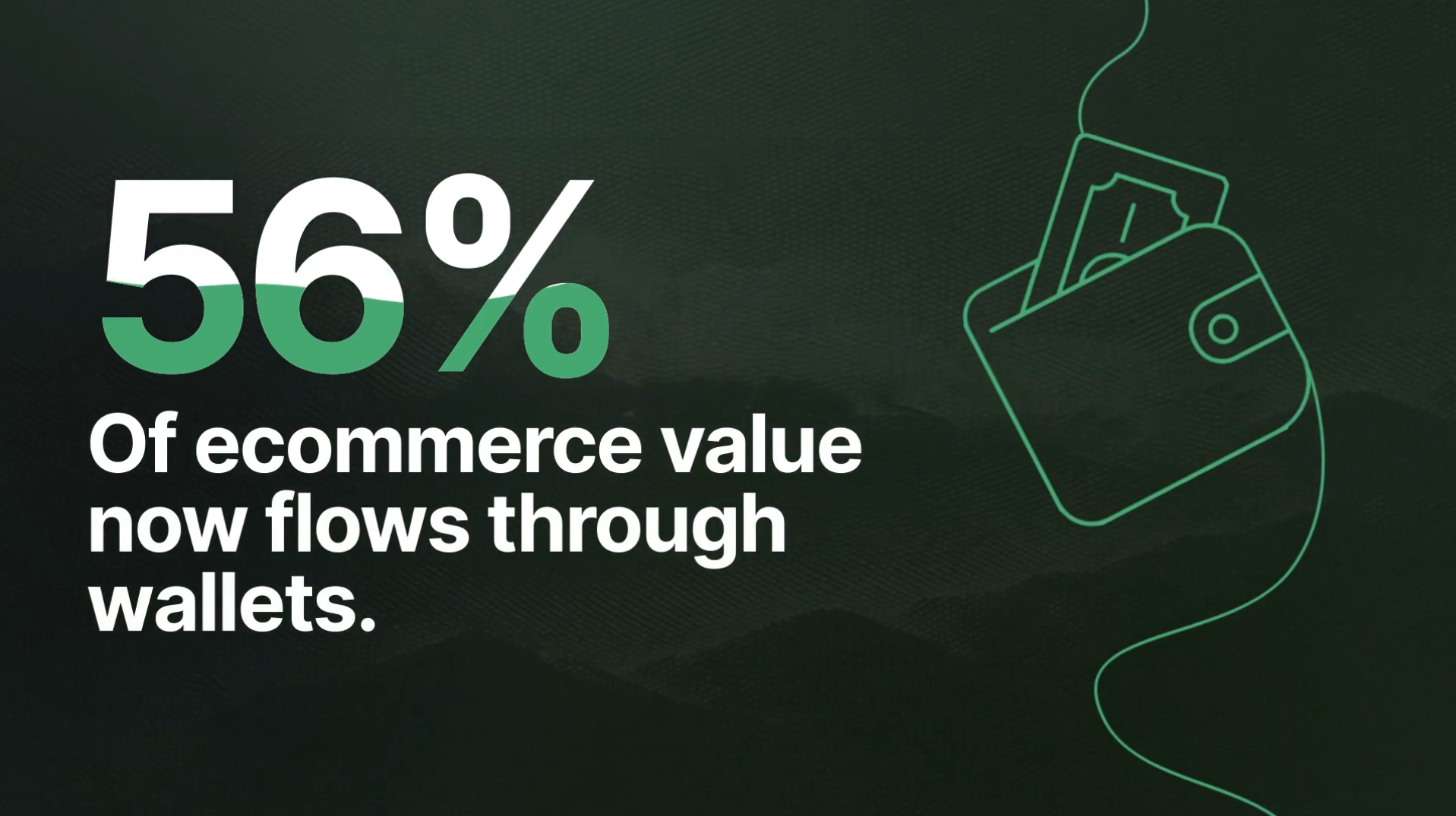
The 56% Shift: Why Digital Wallets Are Rewriting Global E-Commerce
56% of global e-commerce value now flows through digital wallets. Discover how Credible's Open Payment Stack connects localized wallet preferences from VietQR to Pix to instant T+0 treasury settlement through a single API.
Beyond the Speculative Bubble: Why Your Web3 App Lives or Dies by Its Fiat API
Stablecoins processed over $10T in 2025, but Web3 UX is still broken. Discover how Credible’s Fiat API connects on-chain smart contracts directly to 86+ local fiat rails for seamless T+0 on-ramping, off-ramping, and treasury automation.
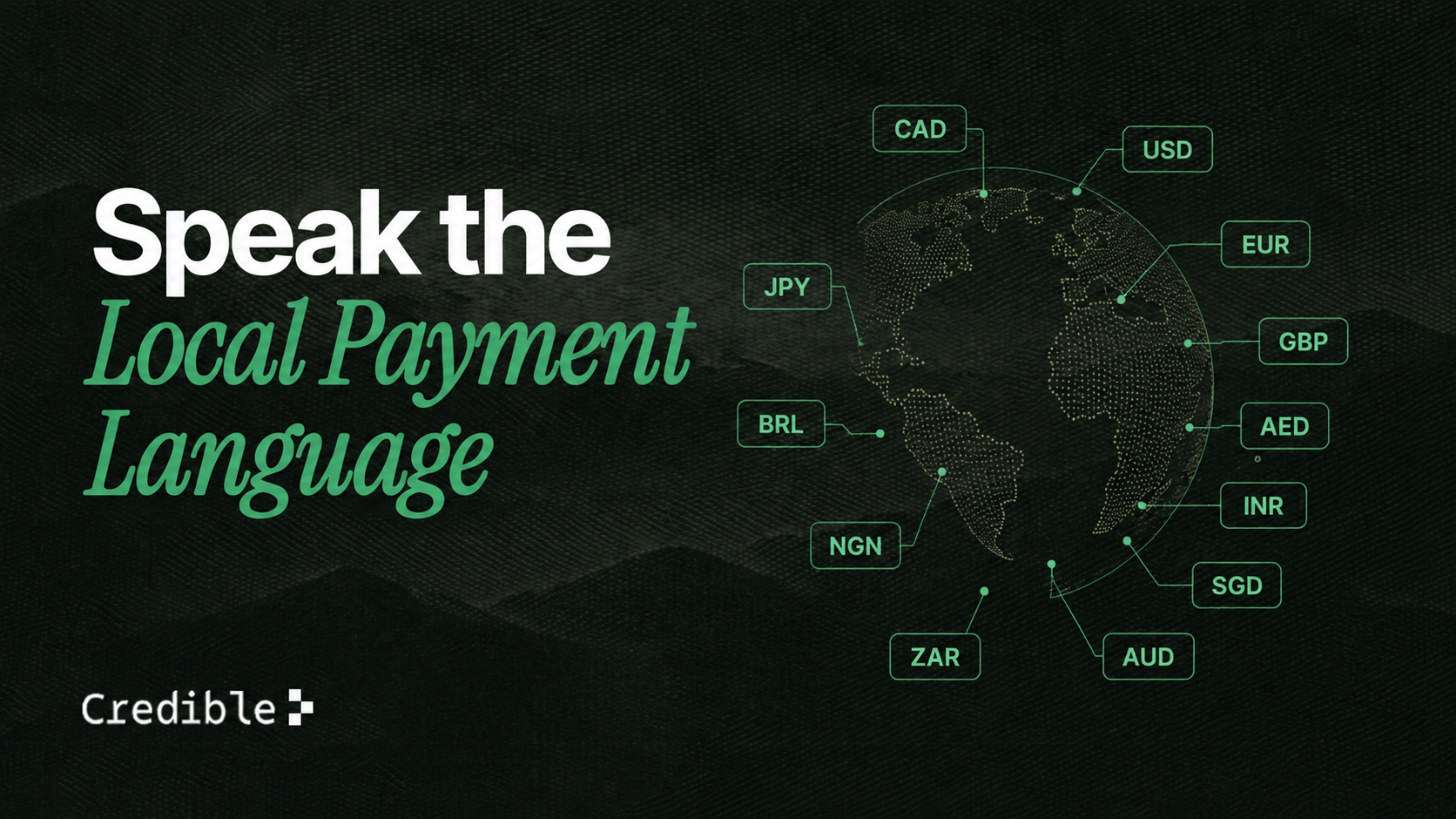
Every Market Has a Financial Dialect: Why Payment Unfamiliarity Kills Global Conversion
Localizing your site without localizing your checkout is an invisible tax on growth. Research shows adding local rails jumps conversion from 4.3% to 6.5%. Learn how Credible’s Open Payment Stack connects 86+ local payment methods from VietQR to Pix to instant T+0 stablecoin settlement through a single API.
$1B Creator Economy is Trapped in Payment Lag
52% of creators earn from international fans, yet 26% suffer payment delays that halt content creation. Discover how platforms use Credible’s Open Payment Stack to accept local payment methods like Pix and VietQR, split revenue programmatically, and deliver instant T+0 payouts globally.
The $5.4T QR Code Explosion: Why Global Payments Don't Need a Single Currency
With 2.2B+ users and $5.4T in volume, QR payments are dominating global commerce. Learn how Credible’s Open Payment Stack connects local rails like VietQR and Pix to instant T+0 stablecoin settlement without the corporate setup nightmare.
Why Payment Rail Fragmentation Kills Global Expansion?
Selling globally requires speaking the local financial language. Discover how Credible connects 86+ local payment methods from VietQR to Indonesian Virtual Accounts into a single API delivering instant T+0 stablecoin settlement.

Inside Credible’s Record $162M July 2026
$162M processed in 31 days, $324K in revenue, and an 8x oversubscribed MetaDAO raise that made Credible an on-chain ownership company. Read the complete breakdown of how we expanded across Southeast Asia, launched our card spend pilot, and pushed cumulative volume past $936M on the path to $1B.
The Invisible Tax: Why Settlement Latency is Quietly Killing Emerging Market Enterprises
A three-day banking delay in New York is an administrative footnote. In an emerging market, it is a operational threat that leaves businesses exposed to 30% annual currency depreciation and compounding capital costs. Discover how Credible is utilizing real-time PayFi architecture and stablecoin routing to process $900M+ in volume on hardcoded T+0 rails, entirely bypassing the legacy correspondent banking trap.

Inside the PayFi Juggernaut Processing $844M+ on T+0 Rails
While the crypto market chases speculative trends, Credible is quietly hardcoding itself into the global economy as a future infrastructure blue-chip. Driven by an Open Payment Stack that replaces slow legacy banking with instant T+0 stablecoin settlement, Credible has scaled past $844M in volume with a roaring $3.5M revenue run rate. Discover how we leveraged a massively oversubscribed $32.8M MetaDAO token launch to build the high-velocity financial architecture traditional gateways simply cannot match.
Rebuilding Capital Velocity: Credible Raises $4M to Scale the Open Payment Stack
Discover how Credible is utilizing a fresh $4M capital injection from top-tier institutional allocators to expand the Open Payment Stack, scale regional compliance, and deliver true T+0 cross-border settlement to modern internet businesses.
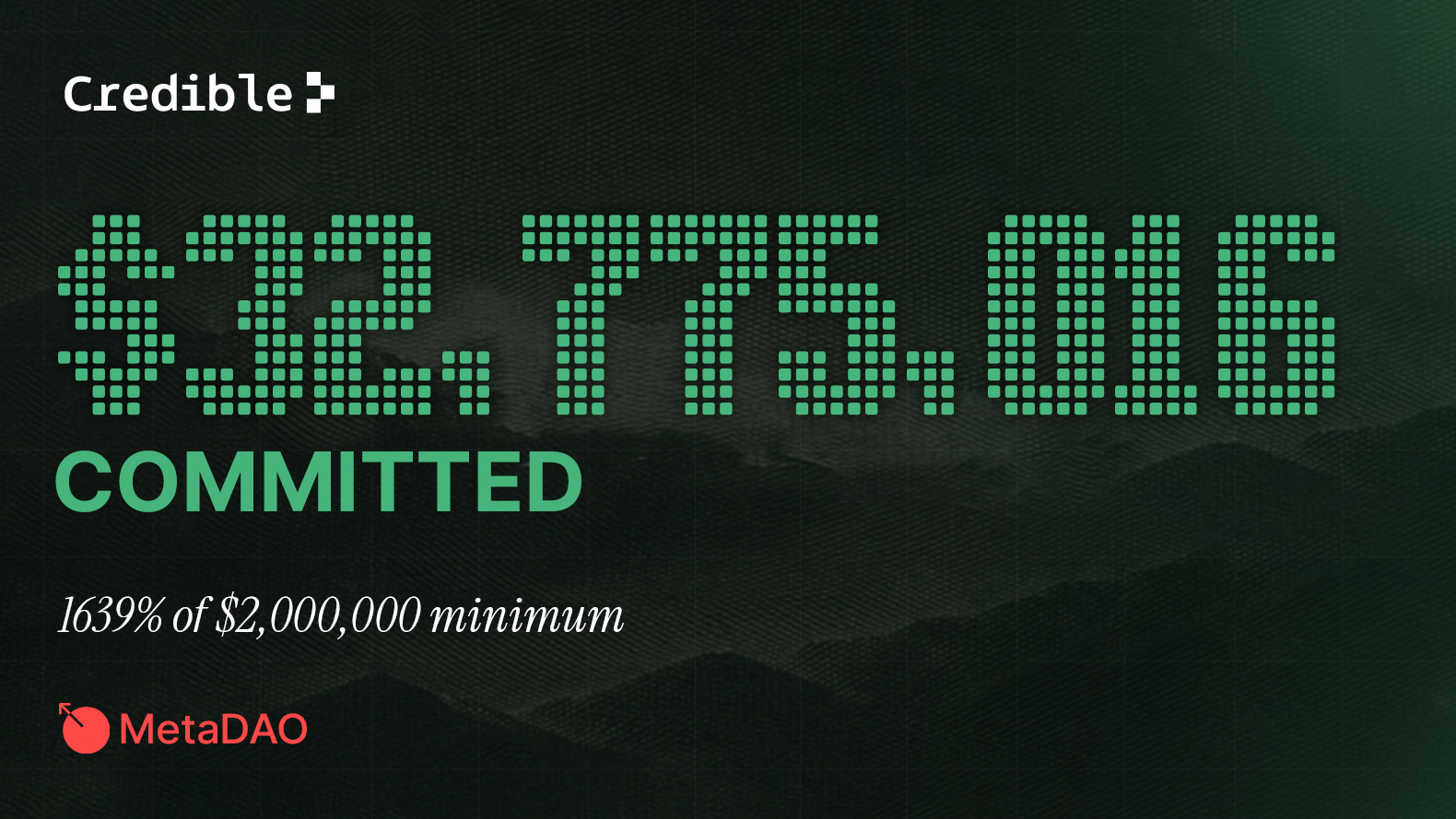
10x Oversubscribed: Inside the $32.7M Surge for the First Community-Owned Payment Stack
Discover how Credible’s $CRED launch shattered records by hitting over $32.7M committed in 4 days, driven by sophisticated operators ready to ditch legacy banking hours and back the future of real-time PayFi.
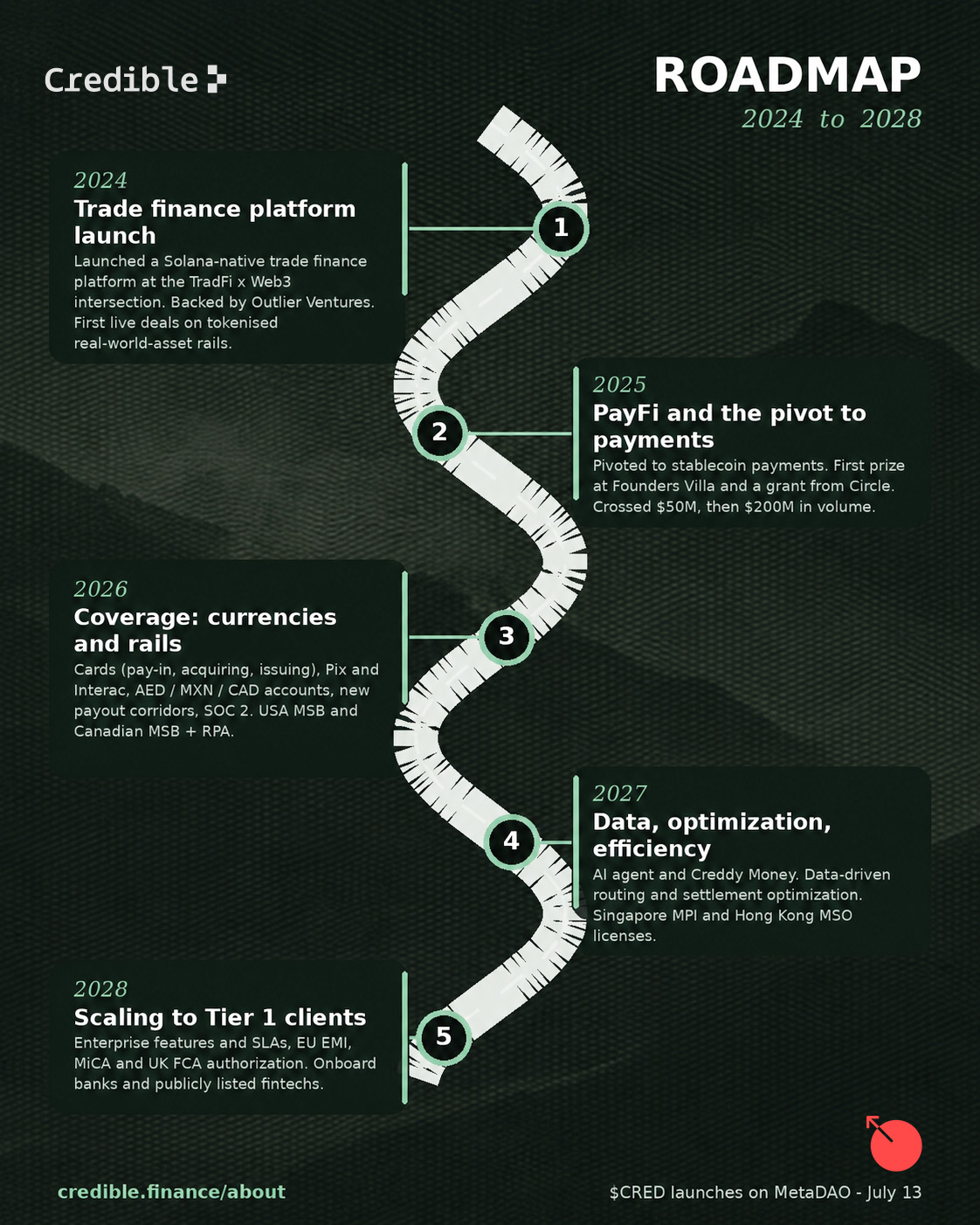
The Strategic Shift Behind Our $700M+ Payment Engine
Strategic pivots are rarely born from failure the best ones are driven by undeniable market signal. Read the unfiltered chronicle of how Credible evolved from a niche trade finance platform into a global PayFi infrastructure juggernaut scaling past $700M+ in volume across 40+ markets by replacing legacy banking friction with real-time stablecoin settlement.
Zero to $600M+ in Volume: The Uncensored Reality of Building the Open Payment Stack
No PR spin, no enterprise fluff just pure financial engineering. Discover the real story of how Credible crossed $600M+ in volume by rebuilding global payment plumbing from the ground up, bypassing legacy T+3 timelines, and giving risk-aware internet businesses the real-time velocity they deserve.
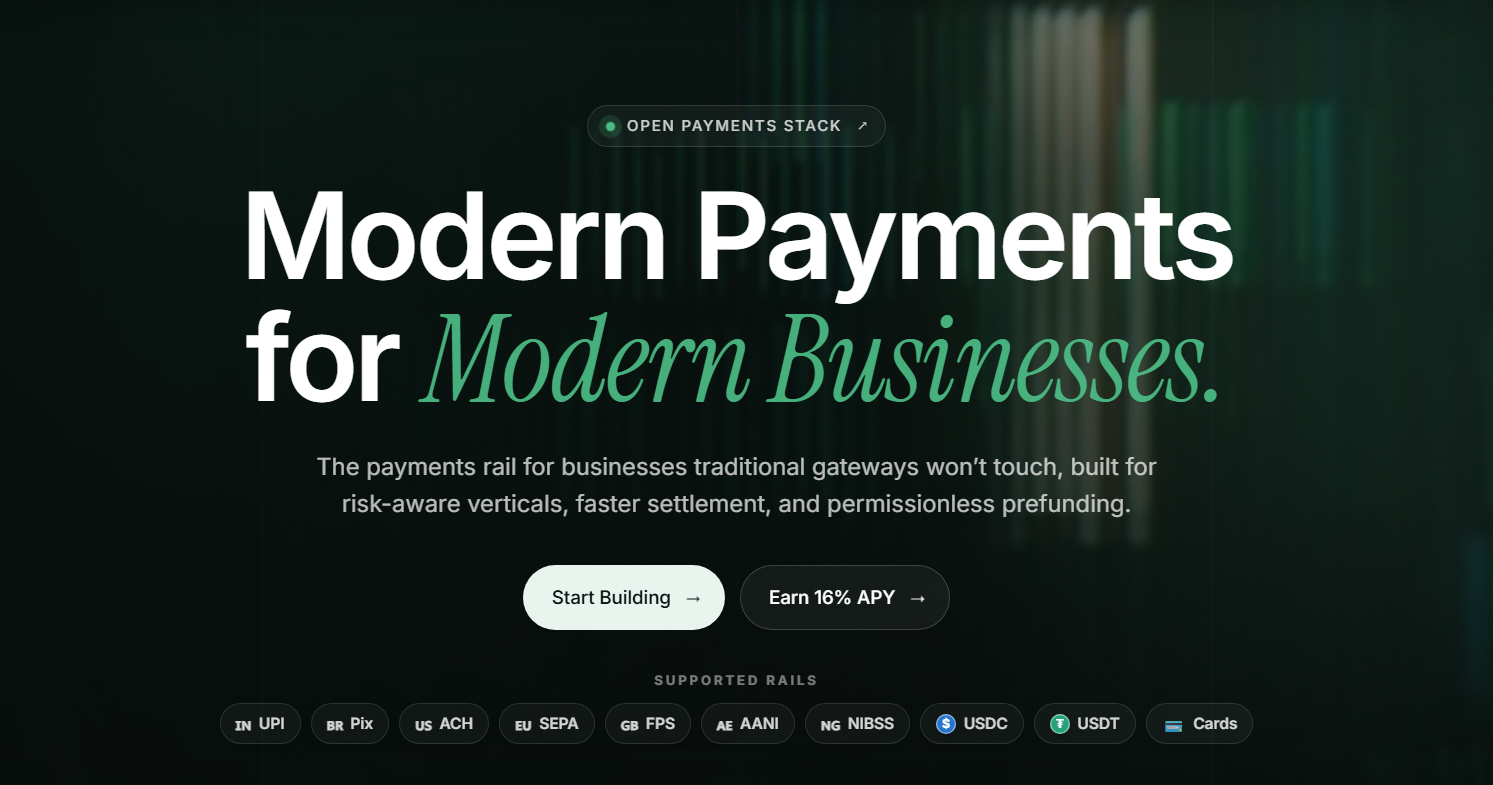
Why Modern Internet Businesses Are Moving Beyond Legacy Payment Rails
Modern companies are global by design, yet their revenue remains trapped in legacy banking hours and T+3 clearing cycles. Discover how Credible’s Open Payment Stack unifies 86+ local rails, automated AI risk underwriting, and on-chain liquidity to deliver real-time T+0 settlement moving capital at the exact same speed as your business.
The Velocity Economy: Generating Sustainable Yield from Real-World Payment Flows
Move past speculative lending loops. Discover how supplying capital to Credible’s permissionless liquidity pools bridges the legacy T+3 settlement gap for global enterprises allowing you to back real-world transactional volume and capture yield directly from the motion of global money.
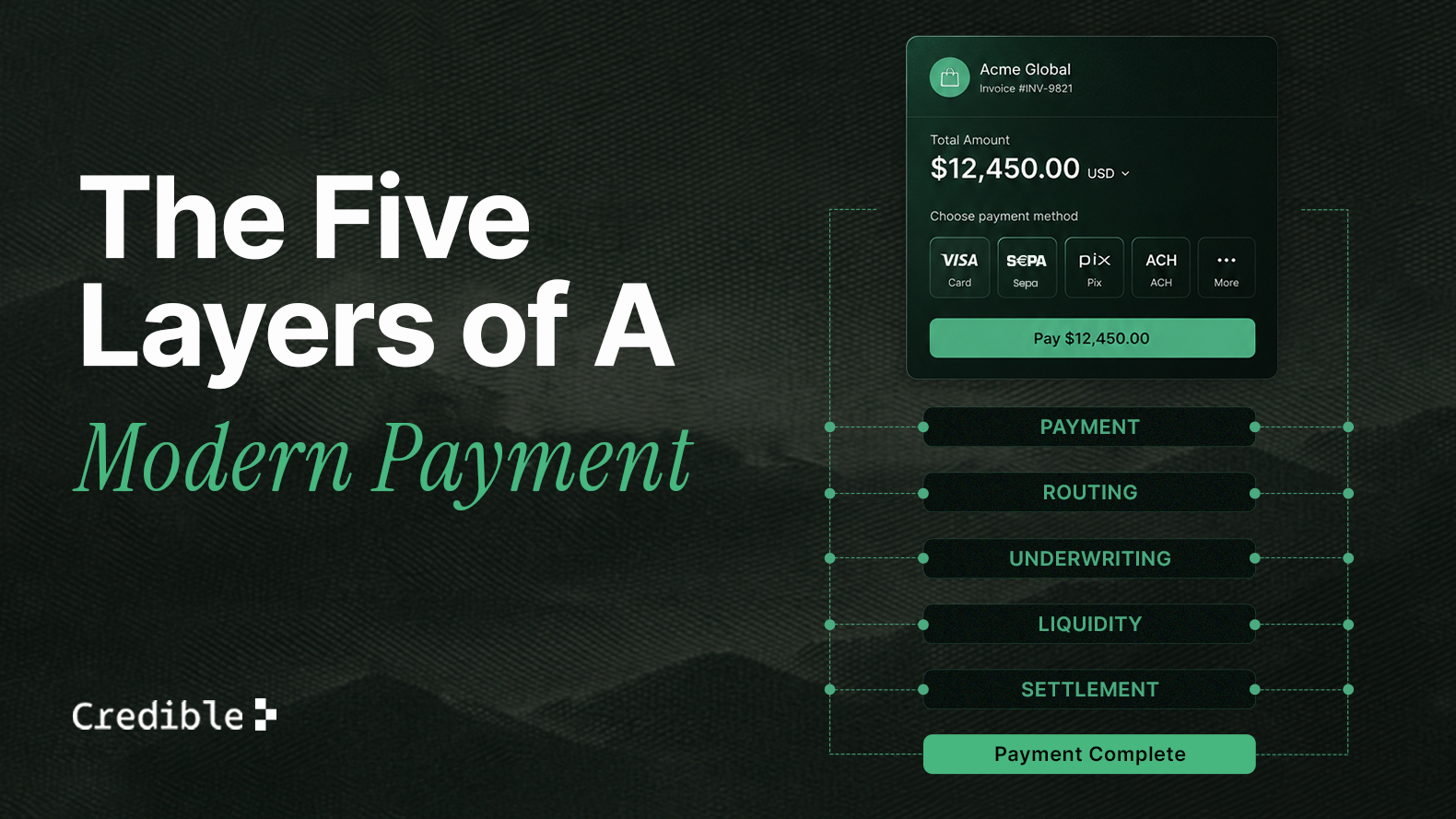
Anatomy of an Instant Transaction: The Five Layers of the Credible Stack
Most people only see the checkout button. What they don't see is the intricate architectural machinery hidden beneath it. Take a look inside the Credible Stack a five-layer engine combining local rails, smart routing, AI underwriting, permissionless liquidity, and instant settlement to deliver true T+0 global cash flow.
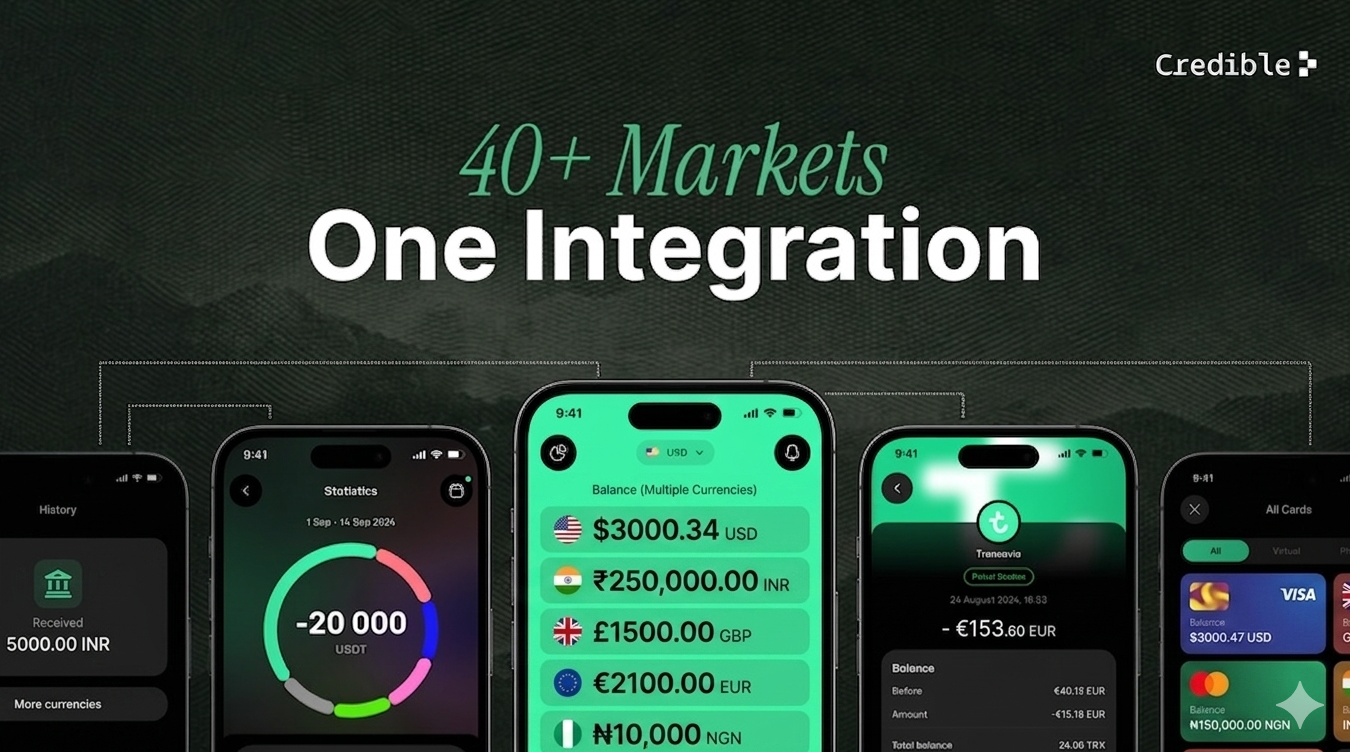
Permissionless Scale: Why Getting Paid Globally No Longer Requires a Sales Call
Selling globally takes seconds, but getting paid globally shouldn't require an enterprise sales cycle. Discover how Credible’s Open Payment Stack provides instant, self-serve access to 40+ markets, 86+ local payment methods, and real-time T+0 settlement allowing you to skip the gatekeepers and integrate straight into production.
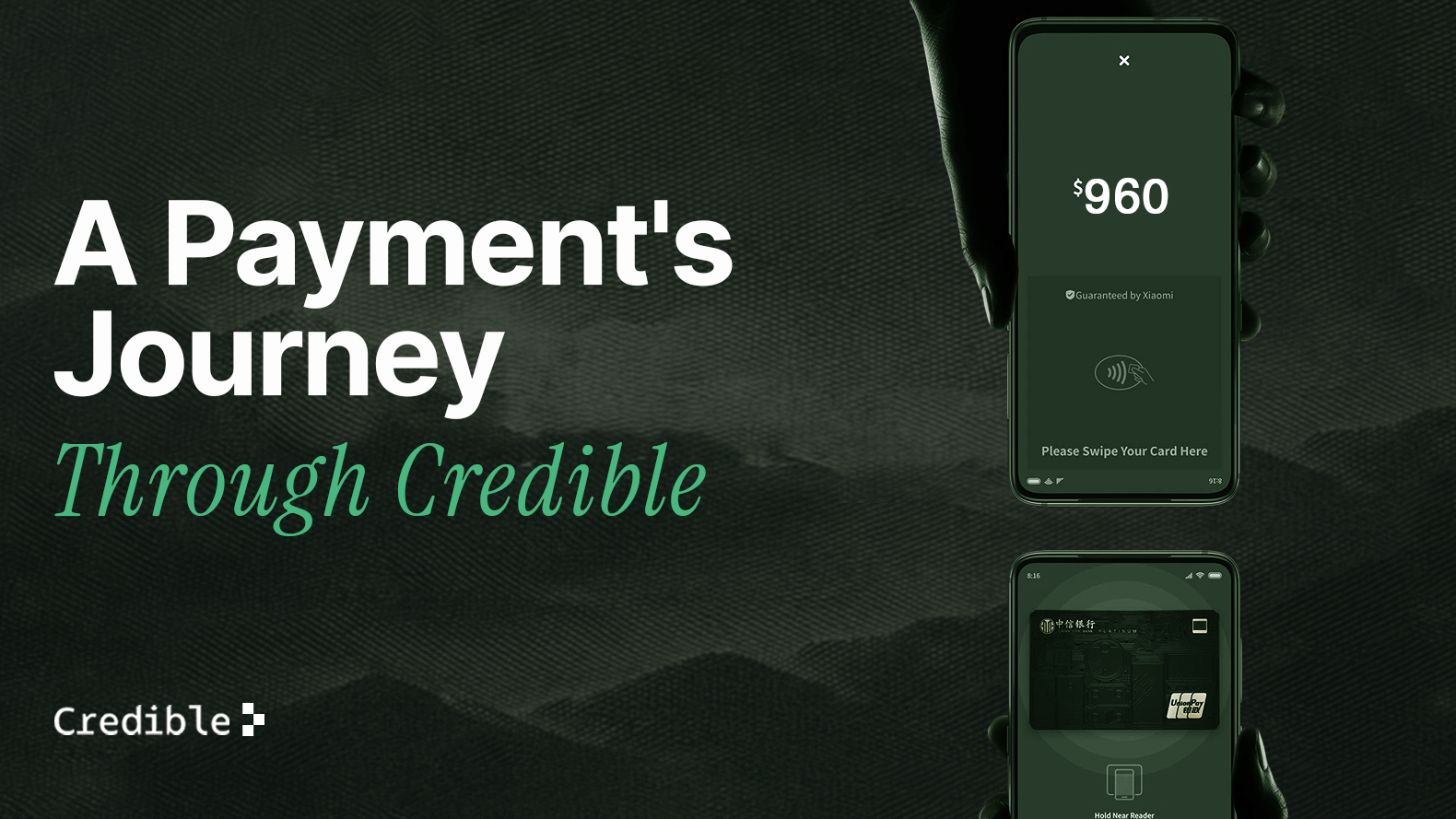
The T+0 Microsecond: What Actually Happens When Modern Money Moves Across Borders
An ocean apart, a customer pays and a business gets settled instantly. But what actually happens in the background? Take a deep dive into the microsecond mechanics of Credible’s Open Payment Stack from AI-driven routing and async risk underwriting to how our liquidity pools completely bypass legacy T+3 banking delays.

Settlement in Seconds: How Polygon is Powering $150M+ in Real-World Scale
Stablecoins are no longer a future projection they are enterprise reality. With over $150M+ processed on Polygon in Q1 2026 alone, Credible is proving that global businesses are opting out of legacy banking delays. Discover how the Open Payment Stack handles the routing, risk, and local payment methods while Polygon powers settlement in seconds.

The Creator Cash Loop: Why Legacy Card Networks Don’t Work for Global Talent
Traditional card networks are trapping creator platforms between chargeback risks and multi-day settlement delays. Discover how the industry's highest-velocity teams are shifting to Credible’s Open Payment Stack leveraging programmable payout rails, direct local payment methods, and T+0 real-time settlement to keep creators paid instantly and platforms protected.
Scale Without Flares: Preventing Legacy Fraud Systems from Freezing Your Startup’s Growth
Legacy risk engines treat startup growth like an emergency. When you scale globally, blunt fraud systems trigger false positives, block local payment methods, and freeze your cash flow. Discover how Credible’s Open Payment Stack bypasses the bottlenecks with asynchronous risk underwriting and T+0 real-time settlement keeping your revenue moving and your platform secure.
The $641M+ Reality: Why the Future of Global Money Demands an Open Payment Stack
Legacy banking is choking internet-native businesses with multi-day settlement delays. With over $641M+ in volume processed, Credible is breaking the bottleneck. Discover how the Open Payment Stack bridges fragmented fiat networks and stablecoin liquidity to unlock true real-time, global payment orchestration.

Ownership Over Utility: Why $CRED Is a Token Backed by a Real Payments Business
Most crypto tokens promise utility and deliver speculation. $CRED is different: tokenized ownership in Credible's live, revenue-generating payments stack. Here's how DeFi liquidity, the Open Payments Stack, MetaDAO governance, and a merchant growth flywheel come together.
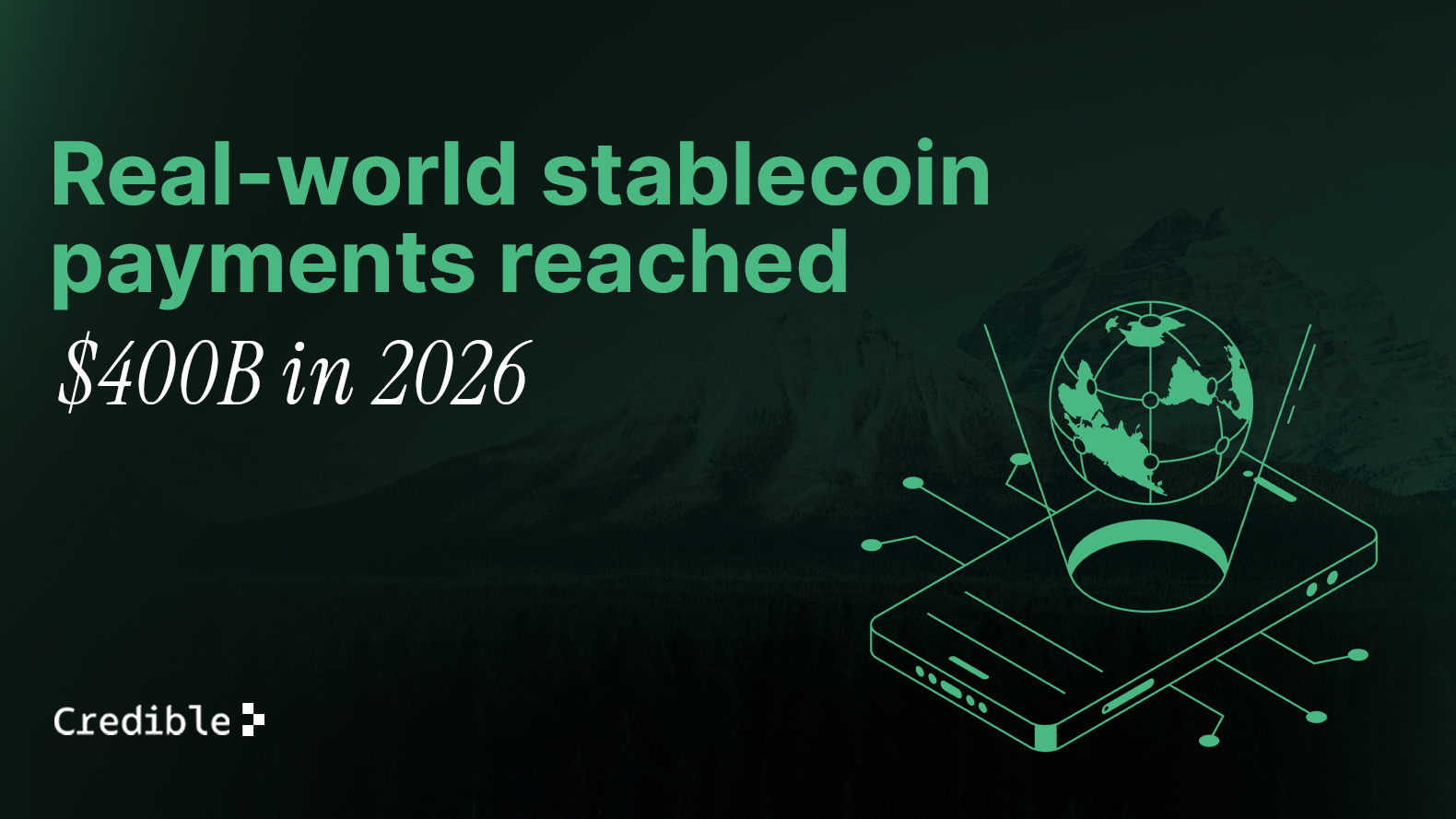
Moving Beyond the Token: Why the $400B Stablecoin Explosion Demands a New Infrastructure Layer
Real-world stablecoin volume just crossed $400B, but raw tokens aren't enough for enterprise velocity. Discover how Credible’s Open Payment Stack bridges the gap between on-chain liquidity, legacy banking rails, and instant T+0 settlement.
The $150 Trillion Cross-Border Boom: Why the Future of Global Payments Belongs to the Modern Business
The global cross-border payments market is on the verge of a $150 trillion explosion, with B2B e-commerce driving a massive 43% surge. Yet, legacy banking rails are still stuck in T+3 time warps, and digital central bank currencies are trapped in regulatory limbo. Discover how modern businesses are skipping the line and the lag by using Credible Finance's AI-driven open payment stack to unlock instant, T+0 multi-currency settlements today.
Real Yield, Real Velocity: Earning 16% APY on the Global Open Payments Stack
The traditional financial system forces digital merchants to wait up to three days to access their own revenue. Credible destroys this T+3 bottleneck by using AI-powered routing and decentralized liquidity to fund instant, T+0 merchant payouts. By providing the stablecoin float that backs these real-world payment receivables, capital providers unlock an institutional-grade 16% APY completely insulated from crypto market volatility and powered entirely by global commerce.
How to Go Live on the Open Payments Stack in 4 Steps
Stop dealing with gatekeeping sales calls and slow corporate onboarding. Discover how to bypass legacy processing friction and go live on the Open Payments Stack in just four steps combining global fiat rails with instant, stablecoin-backed liquidity.
Stablecoins Didn't Fix Payments. Credible Just Did.
Everyone talks about stablecoins saving global commerce, but forcing consumers into Web3 wallets is killing checkout conversions. The real bottleneck isn't the blockchain it's the friction layer between legacy fiat rails and instant merchant liquidity. Here is how an open payments stack uses DeFi pre-funding pools to bridge the T+3 settlement gap, giving merchants T+0 payouts without sacrificing the local payment methods consumers actually use.
Why the Next Era of Payments Runs on Liquidity Networks
The modern digital economy runs 24/7/365, so why are we still settling transactions on legacy banking hours? The traditional merchant account is dead. Here is why the future of finance belongs to programmable liquidity networks.

The High-Risk Merchant Blueprint: How to Accept Local Rails Without T+3 Delays
Traditional gateways treat modern business models like a liability, locking up capital in 3-day clearing queues. This is the blueprint for bypassing legacy T+3 delays entirely unlocking instant global payouts on local rails using decentralized liquidity.

Why Stablecoins Just Became Finance’s New Operating System (And Who Is Saving You From the Mess)
Stablecoins just graduated from crypto back alleys to Wall Street's mainframe. They're now moving billions in B2B payments and corporate treasury faster, cheaper, and without the banking middlemen. But speed without compliance is just a lawsuit waiting to happen. Enter Credible Finance: the hero that makes regulated stablecoin integration boring again. Audit trails, reserve verification, regulatory alignment all wrapped in a workflow that actually works. The new financial rails are here. Credible is why you can trust them.
Distribution is the Only Thing That Matters
A stablecoin sitting in a wallet on Ethereum is not useful. A stablecoin that moves seamlessly into a bank account in Brazil, a mobile wallet in Indonesia, or a merchant settlement file in Nigeria. That is useful. We convinced ourselves that if we just printed enough stablecoins, utility would follow. It didn't.
The Stable Door Opens: Chance to Get Payments Right
The GENIUS Act passed. MiCA is live. BlackRock tokenized a money fund. JPM Coin does $1B daily. The stablecoin train left the station in 2025. But most institutions still don't know the difference between a CBDC and a stablecoin or that holding one makes you an unsecured creditor. Credible exists to close that gap.

The Node Program Is Dead. Your Money Isn't.
We turned off the node program. Not because it broke. Because it stopped making sense. You'll get every dollar back. Plus yield. Onchain. No excuses. Now go read why.

Your Cross-Border Expansion Is Bleeding Out, Not Dying
Most cross-border expansions don't fail. They just stop growing. And that's worse because failure gets a post-mortem. Slow death gets shrugged shoulders.
Build Your Product, Not Your Payment Rails.
Every fintech founder wants "full control" until they're prefunding accounts across five regions, negotiating contracts for every new corridor, and explaining to their board why the launch is delayed again. Payments don't scale like software. The real question isn't "can we build it?" It's "should we spend the next year on infra or on the product people actually pay for?
Launch in 30 Countries Without Locking a Dollar.
Global payments are stuck in the 1990s: lock capital upfront, beg for access, wait days to settle. Thunes, Bridge, and every other "network" runs the same playbook. Credible flips the model. No prefunding. No sales calls. No idle liquidity. Just an open, programmable network where fintechs plug in instantly and even launch their own permissionless funding pools. T+0 settlement. 30+ countries. One API. Stop renting payment infrastructure. Start owning it.
Stablecoins Fixed Movement. We’re Fixing the Roads.
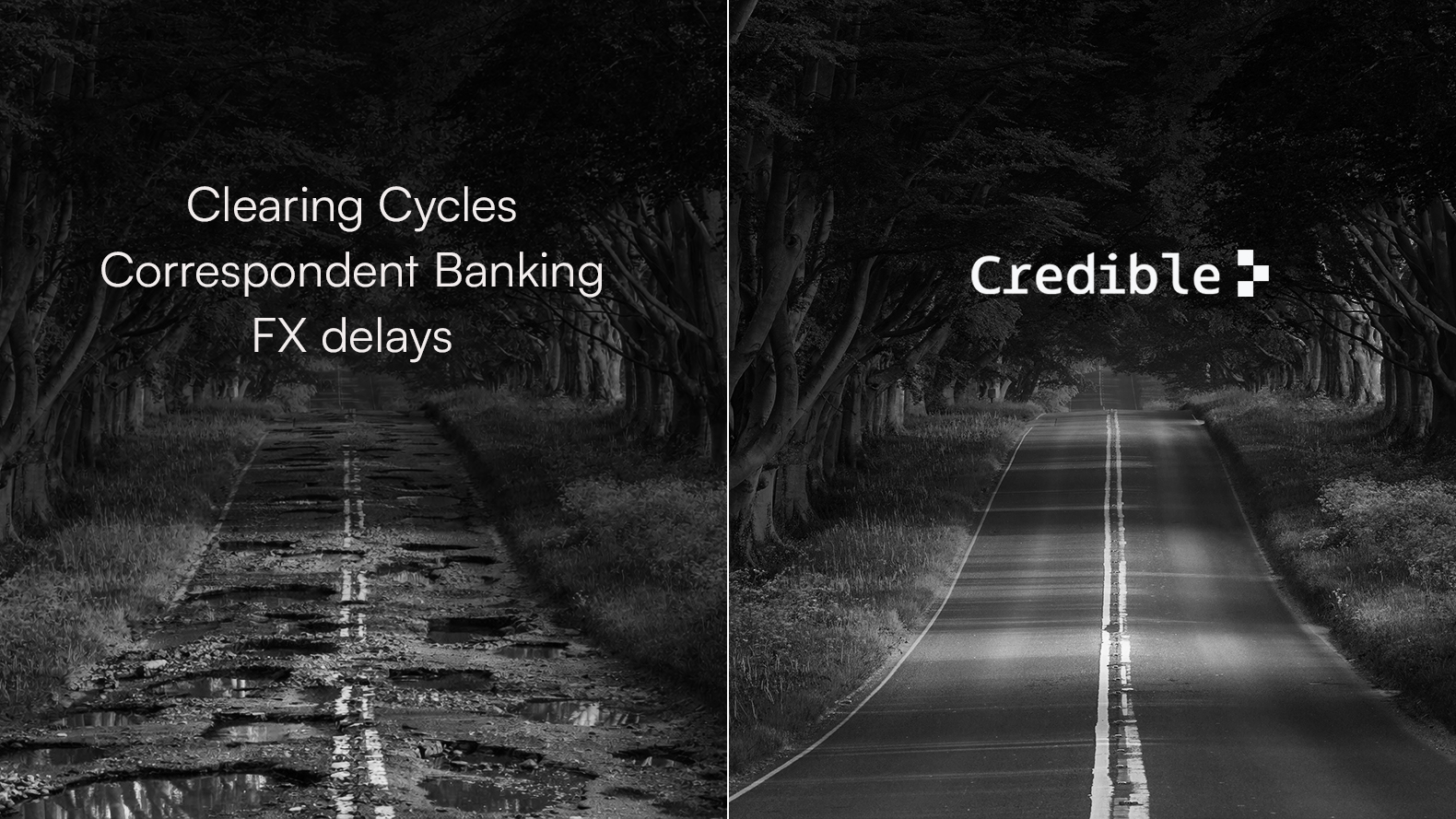
Stablecoins fixed movement. But movement is not a payment. The engine is a rocket. The roads are still dirt. At Credible, we're paving them with on-demand liquidity, shared pools, and real-time orchestration. No more idle capital. No more fragmented balances. Just payments that actually work.
Credible’s Open Network: Payments Without Permission
Global payments are still closed, clunky, and capital-crushing. Prefunding. Sales calls. Locked liquidity. Credible flips it: an open network where fintechs self-onboard, launch permissionless liquidity pools, and settle T+0. No begging. No idle cash. Just payments that actually move.

Credible Insight — March 2026
We crossed $400M in total payment volume this month. That's not a milestone. It's a signal. March was the month Credible stopped being a promise and started being the last-mile payment layer for neobanks, remittance platforms, and fintechs across 30 countries. We secured a $150K grant from Stellar. Registered our MSB with FinCEN. Got listed on Payments.org. And in Singapore, we turned university students into global merchants: live payments, not pilots. The thesis is simple: T+0 settlement. No prefunding. Better FX. Global rails. April we're targeting $100M in volume. Alone. That's 25% of our lifetime volume in 30 days. We're not building another payments company. We're turning payments into real-time capital infrastructure. Track every dollar live on Dune. No smoke. Just volume.

The Competition Isn’t Even in the Rearview Mirror.
Most aggregators are just thin wrappers over yesterday’s tech. While they chase crumbs of yield, we’ve built the definitive liquidity layer for the internet economy. Stop settling for fragmented rails and high slippage. It’s time to put your capital in the only engine built for 2026.
T+0 Payments: When Money Moves the Moment Value Is Exchanged
**Excerpt:** What if money didn’t wait? T+0 flips payments from delayed settlement to real-time value exchange powered by stablecoin liquidity, seamless fiat rails, and a unified stack. This isn’t a faster system. It’s a complete rebuild of how money moves.

Credible Manifesto
The Internet is Borderless. Money is Stuck in the 90s. While information moves at the speed of light, global payments are still trapped in a legacy web of 3-day wait times, hidden FX fees, and fragmented bank networks. The financial system wasn't built for the internet economy so we’re rebuilding it. Credible is the next-gen payment gateway bridging the gap between traditional finance and the future of digital rails. By leveraging stablecoin liquidity and local payment methods (from Pix to UPI), we’re turning "global" from a headache into a default. -T+0 Settlement: No more waiting days for your own capital. -True Global Coverage: Reach the "next billion" users who don't use credit cards. -Community Owned: Powered by Meta DAO to ensure the network serves its users, not just the middleman. The era of slow, expensive money is over. Welcome to payments at internet speed.

The Future of Global Payments Needs T+0 Settlement
Global payments still move at the speed of legacy banking rails slow, fragmented, and expensive. Credible Finance introduces a new model for cross-border payments by combining fiat infrastructure with stablecoin liquidity to deliver T+0 settlement worldwide. By decoupling payment speed from traditional fiat clearing timelines, Credible enables businesses to move money instantly across borders while the underlying settlement continues asynchronously in the background.

Liquidity Abstraction: Unlocking Instant Global Payments
Payments aren’t slow because banks are broken. They’re slow because liquidity is trapped in settlement. Credible’s PayFi layer flips the model**, turning delayed clearing into instant liquidity. By combining stablecoins, receivable-backed financing, and payment orchestration, Credible enables T+0 settlement for global commerce even when fiat rails still move at T+2.

Stop Pre-Funding the Banksters. It’s Time to Make Your Float Work.
Stop pre-funding the banksters. Global payments are built on a lie: that settlement takes days. It doesn’t. The money moves instantly; the banking system just can't keep up. We fix that. Credible is the first PayFi layer that treats every transaction like the collateral it is. We finance the gap between "sent" and "settled" so your users get T+0 while the dinosaurs clear at T+3. This isn't a loan. It's liquidity-as-infrastructure. Stop waiting. Start settling.
The Checkout is Dead: Long Live the Agentic Rail
The next trillion dollars in commerce won’t flow through a checkout page. They’ll move through mandates. In the emerging Agentic Rail economy, AI agents don’t “click to pay.” They execute policy. Humans set the rules; machines handle the settlement. And if your payment stack isn’t agent-ready, you won’t just lose conversions you’ll be invisible to the fastest-growing class of buyers on the internet.
The $100 Billion Leak: Why “Going Global” is Breaking Your Balance Sheet
The internet erased borders for customers but not for money. Today, a startup in Singapore can sell instantly to a customer in London or São Paulo. Yet when it comes time to collect revenue, that “global” transaction still crawls through decades-old banking infrastructure. Funds bounce between correspondent banks, disappear into opaque FX spreads, and sit idle for days in settlement limbo. The result? Most digital businesses unknowingly leak 3% to 7% of every international transaction and lose even more in trapped working capital. In the modern economy, going global doesn’t just make you a software company. It makes you an accidental currency trader, liquidity manager, and victim of legacy financial rails. And until businesses rethink how money actually moves, international growth will keep quietly breaking their balance sheets.
Your Revenue Is Hiding in the Pipes: Solving the Global Settlement Lag
You can sign up a customer in under a minute, but getting paid still takes days. That gap is where growth quietly dies. Behind every international transaction is a maze of banks, batch processing, and hidden FX costs. Your dashboard shows revenue, but your cash is stuck in transit. For global businesses, this “settlement lag” means delayed hiring, paused ad spend, and capital sitting idle when it should be working. The real problem isn’t payments it’s timing. Until companies stop waiting on outdated banking rails and start separating settlement from clearing, money will keep moving slower than the internet that powers everything else.

Beyond Routing: Why the Future of Payment Orchestration is Powered by Stablecoins
Payment orchestration solved where to send money. But businesses still wait days for it to settle, lock up capital in pre-funded accounts, and lose money on hidden fees. We asked a different question: what if we reimagined the settlement layer itself? The answer is stablecoins. Not as a trend, but as the perfect settlement rail—borderless, instant, and transparent. This lets businesses collect in local fiat anywhere and settle globally in seconds, all through one API. The future of payments isn't just about routing transactions. It's about freeing your treasury. It's instant, programmable, and finally borderless.

Credible 2025 Wrap-Up: Enabling T+0 Global Payments with PayFi & Stablecoins
2025 was the year Credible proved that real-time global settlement isn’t just a theory it works at scale. By combining stablecoins with our PayFi credit layer, we delivered T+0 payouts across emerging markets without relying on slow fiat rails. More than $250M in remittances moved instantly, over $60M was financed through PayFi Vaults, and five fintech partners went live in production serving 100,000+ users worldwide. As we head into 2026, we’re expanding from instant payouts into global collections, helping merchants accept locally and settle globally in stable, programmable currencies.